Survey Results for SDA WA Dancing Surfaces Exhibition

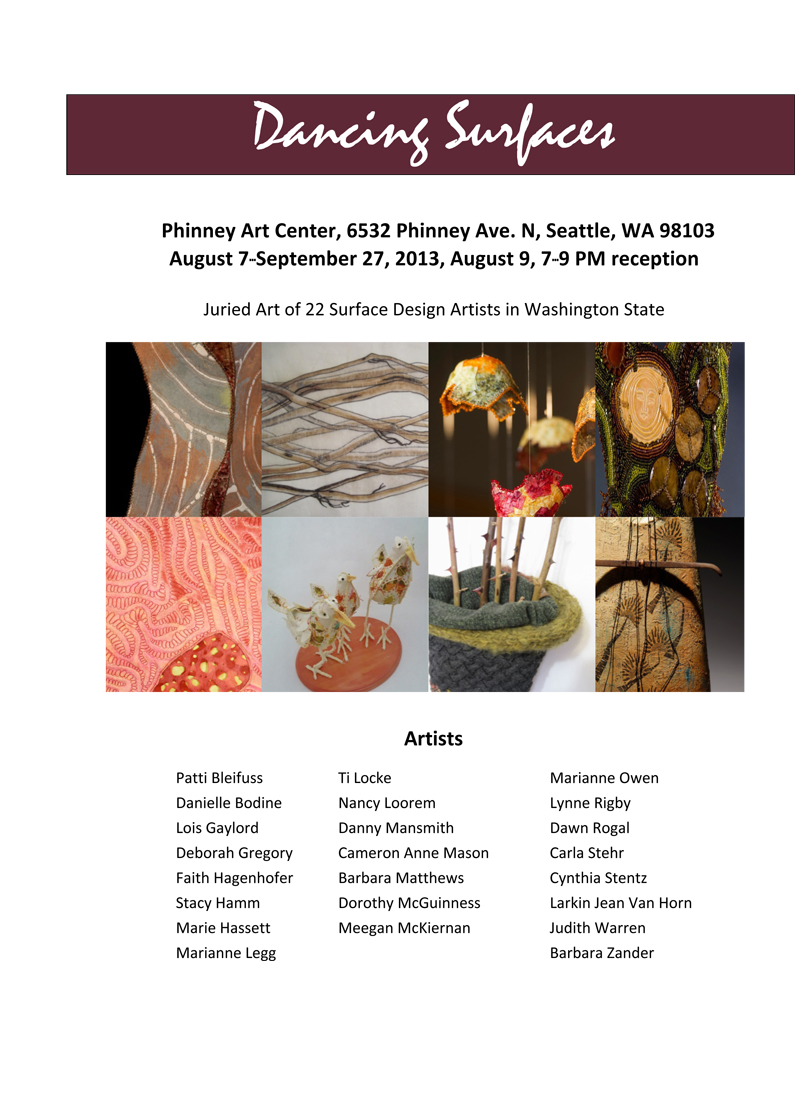
In 2013, the Washington State SDA conducted a call-for-art for a juried exhibition, Dancing Surfaces, that took place at the Phinney Art Center in Seattle in August and September.  Thirty- one members from around the state submitted 50 pieces to be considered.  Thirty-two pieces were accepted from 23 artists.  Members were requested to complete a survey in the fall and winter after the show to determine the improvements that could be made to the show and the interest in shows, in general.  At that time, there were 266 non-institutional SDA members in Washington State and 72 members responded to the on-line survey.

The Dancing Surfaces Exhibition 2013 was put on by Washington State SDA and featured the work of 22 WA SDA members

The Dancing Surfaces Exhibition 2013 was put on by Washington State SDA

For the people who responded to the survey, seventy-four percent did not respond to the call-for-art for Dancing Surfaces.  The primary reason for not entering the show was that life events prevented the application (42%), could not prepare art in the timeframe allowed (41%), the time of year was not good because of other commitments (33%), time of year was not good because of other show conflicts (26%), and size restriction to only two feet or less was limiting (27%).  Other reasons that were important to some were:  a hesitancy to submit to juried shows (24%), restriction to art made in the last year was too limiting (22%), unfamiliarity with the venue (21%), not inspired by the theme (17%), afraid art would not be accepted (17%), have not made the step to submit to shows (15%), and venue was not the right caliper (13%).  Factors that were important to only a few were:  do not do artwork for shows (6%), application fee too high (7%), would rather enter a show for smaller sized art (6%), did not think the juror would accept art (4%), preparing the images (4%), and commission too high (2%).

For the 24% who responded to the survey and who did enter the Dancing Surfaces show, respondents felt that there was clear communication about the show (85%), good publicity (65%), and equitable arrangement of art (63%).  Forty percent felt the size restriction of less than 2 feet was limiting and 10% felt the commission was too high.

Interest in future shows among all respondents was high (89%), as was interest in juried shows (90%).  Many respondents were willing to provide samples of their art process (45%), give a lecture or presentation (35%) or demonstration (33%), conduct a class or workshop for adults (35%) or for kids (29%), and conduct docent tours (23%).

The primary reason members join SDA is to stay in the know about surface design events, people and activities (88%), to receive the Journal (74%), participate in shows (67%),  learn about surface design techniques and connect with people doing surface design (each about 60%).  About half of the members responding want to attend local meetings.

(Percentages are based on responses of agree and strongly agree with the statement.)

For detailed results, please contact SDA representative to WA- Barbara Matthews at bjmatthews76@comcast.net.

Whidbey’s Pacific Northwest Art School to offer Sewing/Garment Design and Construction Program

Lovie Class mannekinPacific Northwest Art School (PNWAS) is pleased to announce a new program to add to its extensive fiber arts class offerings. Beginning this spring PNAWS will present classes taught by Fashion Institute of Technology-trained and SDA member Brenda Lovie. Lovie is known nationally for her work in the world of competitive ice-skating and dance performance. She’s also in demand as a maker of high-end couture garments for special events, weddings, and the performing arts. Lovie is a member of the Whidbey SDA chapter.


The new Sewing Program at PNWAS kicks off this spring with two linked classes. Other sewing classes such as Working with Fine Fabrics will be added to the schedule in the future.


Making a Flat Sewing Pattern from an Existing Garment

Website: https://pacificnorthwestartschool.org/(look under fiber program)

Time: 9-4, Saturday, March 15

Cost: $110

Cutting and Sewing a Garment from a Flat Paper Pattern

Website: https://pacificnorthwestartschool.org (look under fiber program)

Lovie Class toolsDate/Time: 9-4, Saturday, March 22

Cost: $110


Brenda Lovie of Lovie Couture will be instructing the new sewing classes at the Pacific Northwest Art School

Brenda Lovie of Lovie Couture will be instructing the new sewing classes at the Pacific Northwest Art School


Your instructor, Brenda Lovie, the right brain of Lovie Couture, has been designing and making ice skating wear for over 20 years.  She is a member of SDA and a resident of Whidbey Island.

If you’ve been wondering what to do with that beautiful cloth you’ve created in another class or frustrated by using commercial patterns, these two classes will provide the logical next steps in the process of sewing a simple garment from a garment you already own. Register now as these classes will be limited to ten students.

The Pacific Northwest Art School is an Art School located on beautiful Whidbey Island in Washington State.  Each year they hold workshops and classes in Fiber Arts, Mixed Media, Painting, and Photography.

“Out of the Blue” works by Whidbey SDA exhibit

outofbluecard“Out of the Blue” is an exhibition of works in fiber art by artists from the Whidbey Island Surface Design (WISD) at the La Conner Quilt & Textile Museum. Meet the artists and take an artist guided tour of their work at the opening reception on Saturday, January 11, 2014,  Reception is from 1:00 to 3:00 pm. Guided Tour from 1:00 to 2:00 pm.

"Into the Blue" by Marie Plakos

“Into the Blue” by Marie Plakos

Each artist was challenged to literally or figuratively create artwork with Out of the Blue as its theme. At this exhibit you will see contemporary quilts, handmade and hand-dyed textiles, mixed media, wearable art and wall pieces.

With 32 members all residing on Whidbey Island, this SDA chapter has been an inspiration to many.  Their successful show at the Schack Art Center in Everett was fabulous.  You can read more about Whidbey Island SDA and look at profiles of their members on their blog.

The show runs from January 11 through March 23, 2014.  La Conner Quilt & Textile Museum is located at 703 Second Street, La Conner, WA.  Museum hours are Wed-Sun: 11am-5pm, (Mon & Tues by appointment only); Closed major holidays.


SDA Eastside Re-Launch Event!

sdawaCalling all Surface Design Association Members on the Eastside!
We are holding a special event to officially re-launch SDA Eastside meetings in our new home of VALA Art Center, Redmond.  Non-members are very welcome so if you are interested in contemporary fiber & textile art, this is the event for you.

Sunday January 12 from 2-4 pm

vala.jpg


VALA Art Center
7303 164th Ave NE
Redmond Town Center
(next to Starbucks)

There will be a pop-up show of members’ work, information about Surface Design Association & free refreshments – come and join us, chat to local artists & be inspired by amazing art!

SDA members: if you would like to take part in the pop-up show please arrive 20 mins early & bring one or two pieces of artwork, sketchbooks, work in progress.  Work will be displayed on tables so if you have table/floor easels please bring them with you. 

Please RSVP & let us know whether you are bringing work. We are also asking for donations of snacks to share, thanks! 

 To RSVP &  further information, contact Jacqui Calladine:
jacqui.calladine@gmail.com

Building a Body of Work

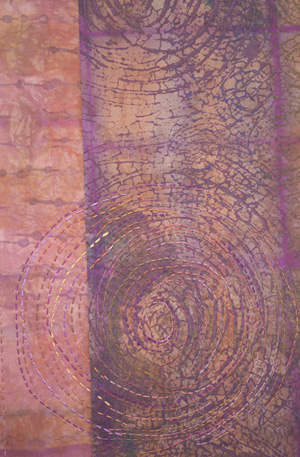
Detail View of original artwork by WA SDA member Peggy O'Heron.

Detail View of original artwork “Don’t burn the Day Away”  by WA SDA member Peggy O’Heron.

In our breakout sessions for the WA State SDA meeting last week, one group, dubbed “The Fabricators” were drawn together by the desire to “build a body of work, prepare for a sale, or have a solo exhibition.”  Here are some thoughts drawn from their session:

When asked “What part of Jane Dunnewold’s presentation (click link to see a write-up of SDA president Jane’s talk_ can you relate to?” there were numerous reactions.  One of the main things that blocks many in this group is what Jane calls “The Committee.”  It’s so easy to be hard on oneself.  The committee resides in our own minds and points out our mistakes and every little shortfall, reducing our confidence.  To overcome this, we need to learn how to play… and then learn by playing.  Rather than being afraid to make mistakes, we need to make more!  We learn a great deal by making mistakes and if we aren’t making any, then we’re not trying hard enough.  Both playing and making mistakes are part of building creative stamina, which is important to develop our artistic muscles.  Some of Jane’s suggestions for gaining creative stamina resonated with this group: free association exercises with a list of words and the image that they conjure; a form of journaling and sketching; taking a photo every day; and the art of intentional noticing.

The next question the group was asked was, “Why did you chose this group?”  Some of the artists are needing some direction or feel they way to learn the logistics of working in a series.  There are those who are interested in developing and preparing a body of work for an exhibit, or working in the direction of putting work in an exhibition.  A few are working to develop the courage to enter a piece in a show and need the confidence to move forward.  Finally, many participants expressed the desire to find their own voice.  They’d like to put some constraints on their body of work.  It was suggested they ask themselves: “Why am I creating this?” and “What is it that I’m trying to say?”

the-first-series-of-time-clocks-30147“What things do you need to further your art?”  Overwhelmingly, Time!  This includes making a commitment, finding ways to stop being non-productive, and coming up with creative ways to stop avoiding the studio.  Another related factor is to be Focused.  Eliminate or ignore distractions… this means “Just say NO to more cleaning!”  Some people discussed needing more confidence and others wanted to set some perimeters or work with the constructs of deadlines, to ensure they’d get their work done.

The interaction and support shared between group members was remarkable.  Some of the tips shared might be things you’d like to try too!

  • Just do it! ENTER a show. Rejection is hard, getting in a show helps validate what you do and instills more confidence, but even when you don’t get in, you learn from the rejection. Even if your piece just didn’t fit the criteria on that given day, within that set of jurors, it may appeal to a juror who remembers your work at a future date and you may be accepted then. Your rejection has then paved the way for future success. Resubmitting your work to a different jury can an often does get a different result. Get your work seen!
  • A good beginning place is to look for themes of upcoming shows to see what appeals to you, or make the choice to enter into a specific show, or a show in a particular place.
  • The first step is the most frightening. The application process might be intimidating but is a confidence builder. Another good entry point is to practice being a juror yourself, it helps you realize that rejection is not to be taken personally. For fun, “google” famous artist rejections.
  • Ask yourself if you are making the act of getting into a show the point, or are you passionate about sharing your work and your message with others. This may reframe the process for you and force you to think about who you are as an artists.
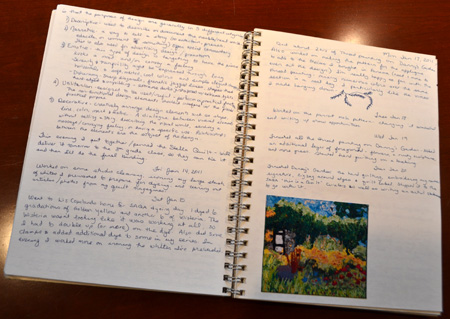
  • Create and keep a “studio log” where the days accomplishments get recorded so you can track what actually does get done in the studio. Log the time you start, end and what you did. Don’t forget to include the time you spend thinking about making art even when you don’t get to work. Adapt as necessary to meet your own needs and style.

    Studio Log book

    Studio Log book

  • The log book can also be a place to record “next steps”, helping to kick start the next session in the studio by taking the element of overwhelm out of the “what should I do today” syndrome we often experience when we finally get into the studio.
  • Have portable projects that can easily be moved to another location outside the studio. There is a lot to be said for a change of venue when looking to be inspired.
  • Establish a regular “work time” but not so rigidly that you kick yourself when you can’t get into the studio. No beating yourself up! The Committee does enough of that.
  • To handle guilt about not finishing the many projects dangling in your studio, donate the pieces you no longer love, give away, throw away or in some other way, part with things you probably never will finish and make you feel like a slouch for not finishing in this lifetime. Someone else may really want to finish.
  • Self-promotion is one of the most important parts of showing your work. Create a self-promotion packet, create an artist’s statement with a professional polish that presents you in the best light. It speaks loudly about who you are.
  • The “Artist’s Trust” is a great resource for the business side of art. http://artisttrust.org/index.php/for-artists/career-training and http://artisttrust.org/index.php/support-artists/creative-career-center. Edmonds Community College has an Artist’s Trust program as well.
  • Set a timer and allow yourself a five minute (or other amount of time) clean-up period each day when you first arrive in the studio. Make it a part of your studio entry ritual if need be. Twyla Tharp in her book, “The Creative Ritual” advocates this sort of thing. (See Below for a couple of great examples from Twyla’s book–a great read if you need to get your creative juices flowing.)
  • If you look at what has lasted through time, art is clearly one of the more valuable things we have to offer. How can we as a group support one another in the future? Create an emailed list of resources and calls for entry.

“You may wonder which came first: the skill or the hard work. But that’s a moot point. The Zen master cleans his own studio. So should you.” The composer Igor Stravinsky did the same thing every morning when he entered his studio to work: He sat at the piano and played a Bach fugue. Perhaps he needed the ritual to feel like a musician, or the playing somehow connected him to musical notes, his vocabulary. Perhaps he was honoring his hero, Bach, and seeking his blessing for the day. Perhaps it was nothing more than a simple method to get his fingers moving, his motor running, his mind thinking music. But repeating the routine each day in the studio induced some click that got him started. ― Twyla Tharp, The Creative Habit: Learn It and Use It for Life

In the end, there is no ideal condition for creativity. What works for one person is useless for another. The only criterion is this: Make it easy on yourself. Find a working environment where the prospect of wrestling with your muse doesn’t scare you, doesn’t shut you down. It should make you want to be there, and once you find it, stick with it.  To get the creative habit, you need a working environment that’s habit-forming.
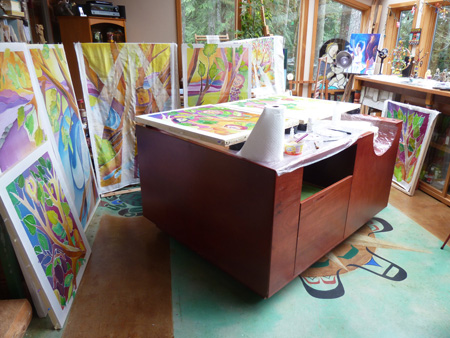
Studio of Laurie Kathleen Clark, WA SDA member, artist, and sacred space consultant for "Heartitude: Art + Soul"

Studio of Laurie Kathleen Clark, WA SDA member, artist, and sacred space consultant for “Heartitude: Art + Soul”

All preferred working states, no matter how eccentric, have one thing in common: When you enter into them, they compel you to get started.” ― Twyla Tharp, The Creative Habit: Learn It and Use It for Life

Thanks so much to Laurie Clark, for taking such comprehensive notes for the Fabricators group session! Laurie will be leading a special retreat and art-making workshop called ‘Honoring Our Ancestors with Art & Prayer” on November 1st.  Please see our SDA WA calendar https://surfacedesignwa.wordpress.com/calendar/ for more info!

SDA Pres Jane Dunnewold meets WA SDA

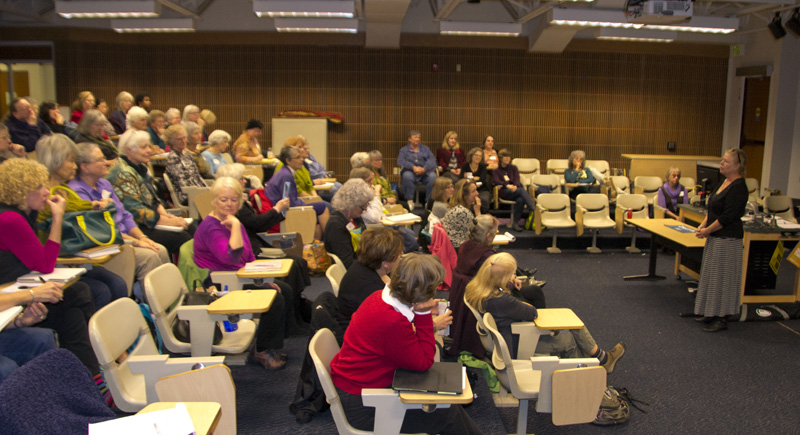
SDA President Jane Dunnewold speaks to WA SDA

SDA President Jane Dunnewold speaks to WA SDA

 A wonderful treat for Washington state SDA members, Jane’s talk on October 12 focused on the psychology of being an artist.   Here are some points that this artist pulled out from her speech:

We should always be in a cycle that includes studying, analyzing, thinking, making, and critiquing our art.  We can feel as if we haven’t done enough… learn to be satisfied with the work you’re doing.  Look to find what’s your best path and turn inward to find it.  Connect with the mystical-the mysterious part of life we can’t understand.

Jane’s definition of “Alignment”:  when what you love to do is what you’re good at.  There is a learning curve to doing something really well- you need to practice.  Often, you start out wanting to play at something.  If you play around long enough, you start to understand it a bit and want to get good at it.  You need to keep at it to get good.  Persistence can be undermined in many ways.  You might feel you aren’t talented at something.  You shouldn’t look at comparing yourself… accept what you’ve got and go with it.  We’re all challenged with the difficulties of having a busy, crazy life.  Building time into your schedule for your art is important.

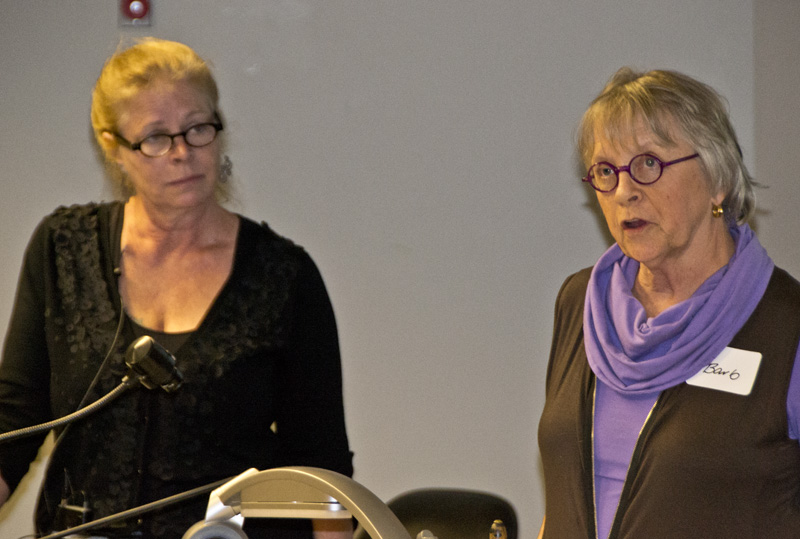
WA SDA representative Barbara Matthews introduces Jane Dunnewold

WA SDA representative Barbara Matthews introduces Jane Dunnewold

A huge negative influence on our artwork which we all feel is what Jane calls “the committee.”  These are the voices you hear or faces you see in your mind whom you want to please or for whom you want to have your artwork be good enough.  You may hear a specific voice saying “What are you going to do with that?”  Or you might compare your work with the work of an admired artist and feel you come up short.  It’s important for you to think about who you have on your committee… then fire them!  Learn to Say YES to your distinctive style and choices you make for your art.

We also need to develop our “Creative Stamina.”  Jane suggests we develop a program of creative strength training… like cross training in the gym… go back and forth between different activities that support your development as an artist.  These may include:

  • Cultivating looking- take a photo each day and post them online- engage seeing-closer,richer, in a more detailed way
  • Writing- even if not a writer it helps us organize and keep track; can do a Free Association- write a term at the top of a page and free associate for 2 minutes- can lead to design inspiration and ideas; write descriptions to help see more thoroughly and cultivate curiosity
  • Visiting museums & galleries
  • Reading about other artists
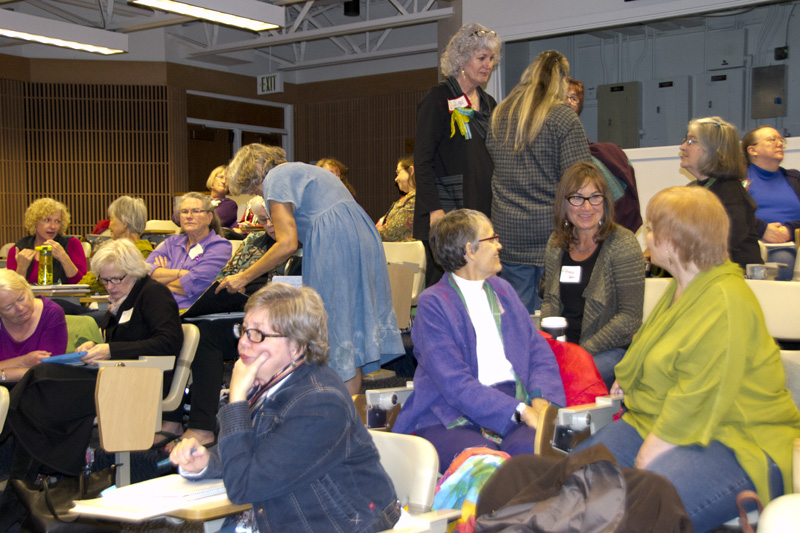
WA SDA members

WA SDA members

Work on being proud of every aspect of what you do.  The detail, materials you choose, and the finishing work- all of the craft needs to support the message of the piece.  You should practice “intentional making”, limit variables and simplify.

Each of us has a life that has elements that are fascinating… bring that out in your work!  Craft a statement about your work and practice saying it aloud so you can comfortably talk about your work.

WA SDA members

WA SDA members

Finally, don’t be afraid to make mistakes… it’s how we learn and grow.  Jane joked, “I’ve made so many mistakes and have been so good at it, that I’m thinking of making some more.”

Thanks so much to Jane and to all our members and guests who attended.  Coming soon- reports from our small group breakout sessions!

What Direction Would You Like To Take Your Art?

–Have you thought about mentoring or teaching a class or workshop?

–Would you want to build a body of work, prepare for a sale, or have a solo exhibition?

–Do you want to branch into a new material, do installation art, or make your art bigger?

–Do you want to get better at a technique or just have fun?

JanePlease join us October 12th for an SDA meeting open to everyone in WA State featuring Jane Dunnewold, SDA President.

Meet like-minded artists to share ideas about Jane’s presentation on Making and Meaning, as you think about your future, and about what could further your art.

See blog post on September 17th for more details by clicking HERE.

Dancing Surfaces Show and Juror’s Award is Announced!

Trisha Hassler has reviewed the submissions and selected pieces for the SDA Dancing Surfaces Show. Speaking for the committee, I was happy to have her make the selection because there were so many wonderful submissions. The show promises to be one filled with variety and will showcase the talent in Washington State.

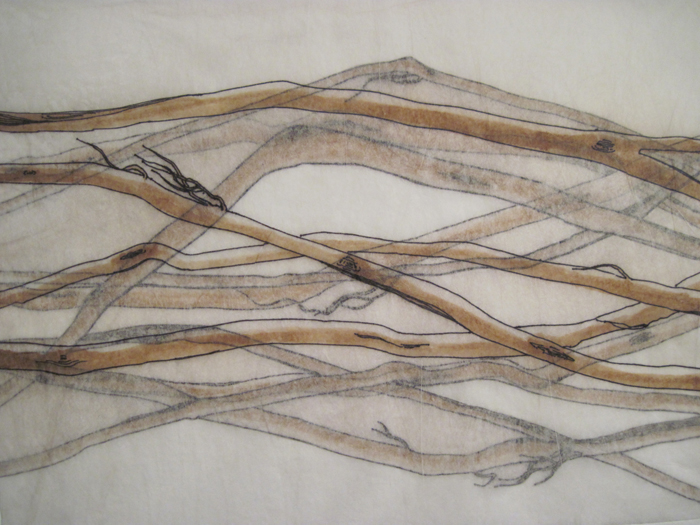
"Tree Bones" by Meegan McKiernan

“Tree Bones” by Meegan McKiernan

She has also selected her choice for the Juror’s award. Her choice is “Tree Bones” by Meegan McKiernan! Congratulations Meegan! About the piece Trisha said “This piece has a quiet resonance that really appeals to me. I find the soft voice compelling and the sophisticated sense of design makes it an interesting contrast of subject and materials.” Meegan will receive a $200 award. We are looking forward to seeing the piece in person!

About the submissions in general, Trisha had this to say—

“Spending time with these works of art was a real treat for me. The balance of new techniques with traditional materials as well as the attention to craftsmanship presented a wide variety of work to choose from. The expansive definition of surface design allows for many expressions and interpretations of the mediums and I was excited to see so many different creative ideas.”

Persons with artwork accepted will be receiving instructions in the coming weeks. The following are important dates to remember:

  • August 5, 9 am-­‐9 pm, August 6, 9 am-­‐5 pm. delivery of artwork to Phinney Art Center Mailed art must be received by August 5th.

  • August 9, 7-­‐9 PM reception for Dancing Surfaces

  • August 7-­‐September 27, 2013 exhibition runs

Congratulations to all of the artists who had work selected for the show. If your piece(s) was not selected, know that the competitive field and limited space was the reason.

If you have not heard whether your piece was accepted please email event.surfacedesignwa@gmail.com.

SDA Dancing Surfaces Exhibition Committee

SDA’s Michael Cepress on Art Zone with Nancy Guppy

Many of you will remember Michael Cepress’s inspiring presentation from the Surface Matters Symposium last spring. Last night his work was showcased on the Seattle Channel’s Art Zone with Nancy Guppy.  If you didn’t catch it you can watch it by clicking on HERE.

email_AZbanner (1)
 
Inspired fashion, folk, speaking chairs and a comedy about aging on Art Zone
Clothing designer Michael Cepress struts his stuff while making Seattle a more fashionable place. Photographer Ernie Sapiro and Pacific Northwest Ballet principal dancer Maria Chapman take over Pike Place Market’s Athenian restaurant. Jack Straw Productions presents Story Chairs, a compelling mix of true stories and original songs from 32 writers, musicians and readers. And Assisted Living, a comedy about a band of aging misfits by local playwright Katie Forgette gets a world premiere at ACT Theatre. Plus some boot-stompin’, folksy music from Vaudeville Etiquette, whose new EP Debutantes comes out next month.